everythingdev
A self-hosted development environment where AI agents build, review and ship code, and I make the decisions.
What it does
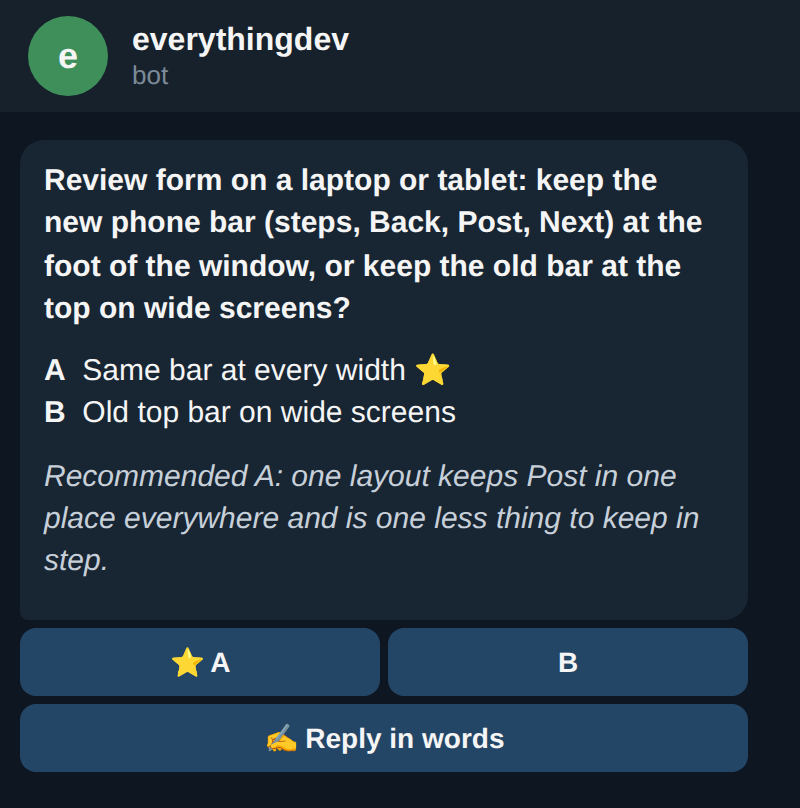
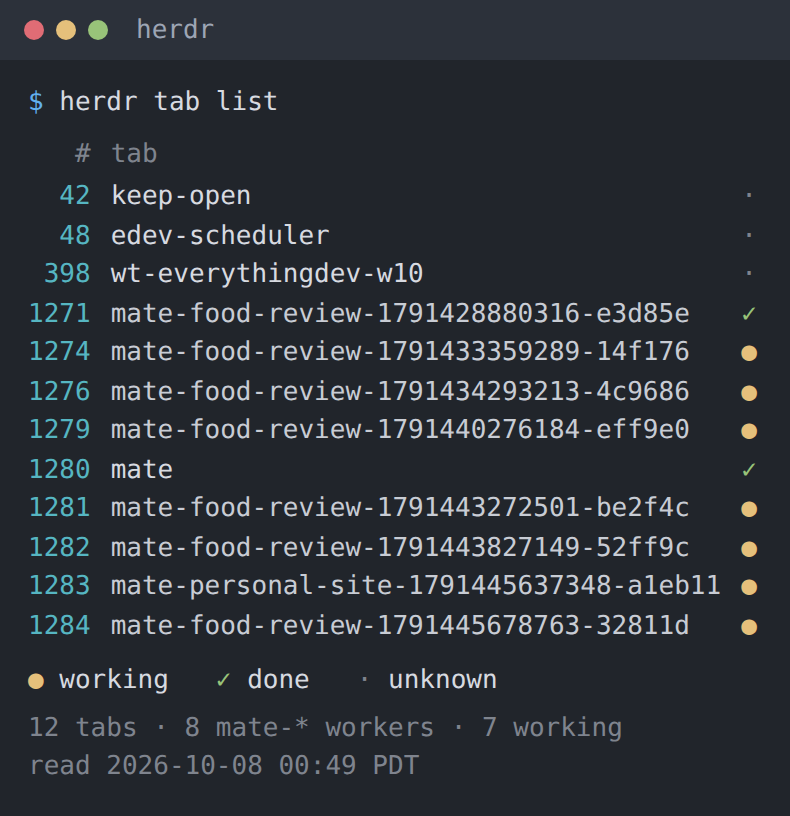
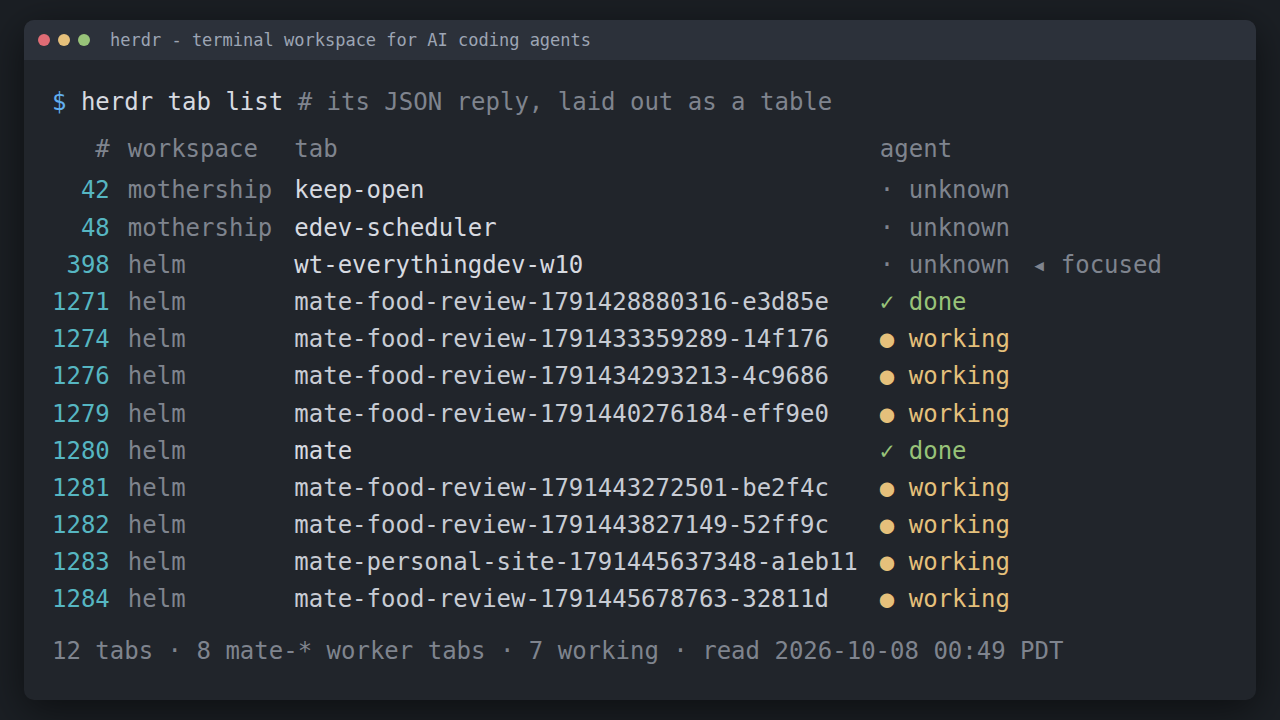
One repository provisions my Linux machine and installs a layer of hooks, skills and reviewer agents into Claude Code. An orchestrator dispatches AI worker sessions into a pool of git worktrees, gates every change through an independent adversarial review, merges only when that review and CI pass, and reaches me through a single Telegram message when a decision is mine.
It manages nine projects, Gleam Eats and Truth Seeker among them. The code is written by AI agents working under my direction; I set the direction, pick between designs and answer the decisions they raise.
Architecture
- Intent
- Worker in a leased worktree
- Adversarial review
- Merge check + CI
- Deploy
- Hooks. 7 Claude Code hooks: a guard before every tool call, a sync of per-project state at session end, and a watcher that wakes the orchestrator.
- Orchestration. 37 Python modules: a file-based job queue for escalations, decisions and review receipts; a worker dispatcher; a scheduler; a systemd watchdog; a lease pool of git worktrees.
- Review. 4 reviewer lenses and a fixer agent. A change lands only when every lens routed to it has passed at that exact commit, a merge check exits 0, and CI is green.
- State. Per-project manifests and backlogs live in a separate fleet repository, one entry per project.
Hardest problems
CI with no free minutes left
When GitHub's free CI minutes ran out in August 2026, all CI moved to self-hosted runners running as user services. The host has no sudo and no Docker, so LXD supplies throwaway containers, with podman inside one for the image build.
A scheduler that died unnoticed
The scheduler stopped for 83 minutes without anyone knowing, because its monitor lived inside a terminal session. It now runs under a systemd watchdog with bounded backoff, a standard-library phone alarm and passes that never block.
Code comments nobody could check
1.9 MB of comments made claims about the code that nothing verified. A precision-first checker now pins every referenced path, qualified name and annotated count to the code; three broader rules were measured and removed.
Screenshots